
Contents
More from Data Governance

Data Governance | Data ownership is the key to better data

Category: Data Governance | Tags: #data governance, #data ownership, #data owner, #data management, #data quality
Explore the differences between data governance and data ownership, learn more about the role of data owners and gain insight into how you can implement data ownership to increase trust in your data.
Data ownership creates trust in data
Most organisations depend on data to succeed and operate effectively. When data ownership functions well, it contributes to data being managed and having its value increased as an ever more valuable balance sheet item.
A lack of data ownership creates many frustrations and can affect both the top and bottom line. When data ownership does not work, we face confusion about how to use the data, who should have access, and we may encounter data quality challenges. We lose trust in the data and may choose not to use it.
Here in Norway, many organisations still have a way to go in establishing ownership of their data. This article explores data ownership and is aimed at those who hold a leadership position in data and analytics, or are an enthusiastic business leader who sees the value of data.
How does data governance relate to data ownership?
Data Governance is a framework for the handling and management of data across an organisation. It involves the development and implementation of procedures, policies, architecture and standards to ensure data quality, integrity, security and consistency.
I prefer to talk about data ownership. And I am less fond of talking about data governance. Data ownership is tangible. Data must have an owner – someone who looks after the data and ensures it is used in the best possible way and used correctly.
What is data ownership?
Data ownership is an important principle within data governance that describes ownership of data across the organisation. Think of data as a property owned by a landlord. A landlord has the responsibility to ensure that the property is properly managed. They also have the right to grant access rights to tenants.
With data ownership, an organisation can designate individuals, known as data owners, to administer and make decisions about various aspects related to data. A data owner is often the leader of a process or function that depends on the same data to deliver on their objectives.
Data owners can resolve problems that arise from data or delegate them to data stewards who work with them on a daily basis. Data ownership is about accountability and responsibility. Data owners are the ones who make the final decisions to ensure the quality of the datasets within their domains.
Why is data ownership important?
Data ownership is important for several reasons:
- Data ownership establishes accountability – and contributes to trust in the data A data owner is responsible for all decisions made regarding specific data – for example, how product data and key metrics related to product characteristics should be handled and interpreted. A data owner will also determine quality dimensions and rectify data-related problems in a way that is consistent across the organisation. This creates a clear line of responsibility when it comes to data misuse or errors.
- Data ownership contributes to consistent and correct use of data Data owners help maintain consistency by ensuring that data is collected, stored and used in a standardised manner throughout the organisation, and that it is interpreted consistently. Data owners play a key role in ensuring that data is used correctly to support business decisions, as they have a better understanding of what the data represents than most of those who wish to use the data.
- Data owners enforce security and privacy requirements Most data should be shareable broadly, but sometimes data requires extra care – because it represents sensitive information, including personal data and business-sensitive data. It is the purpose of the use that largely determines whether the data can be used or not, and it requires expertise to assess what is acceptable and what is not. Data owners have this expertise and decide with whom they wish to share their data and under what conditions.
Data owners do not work alone
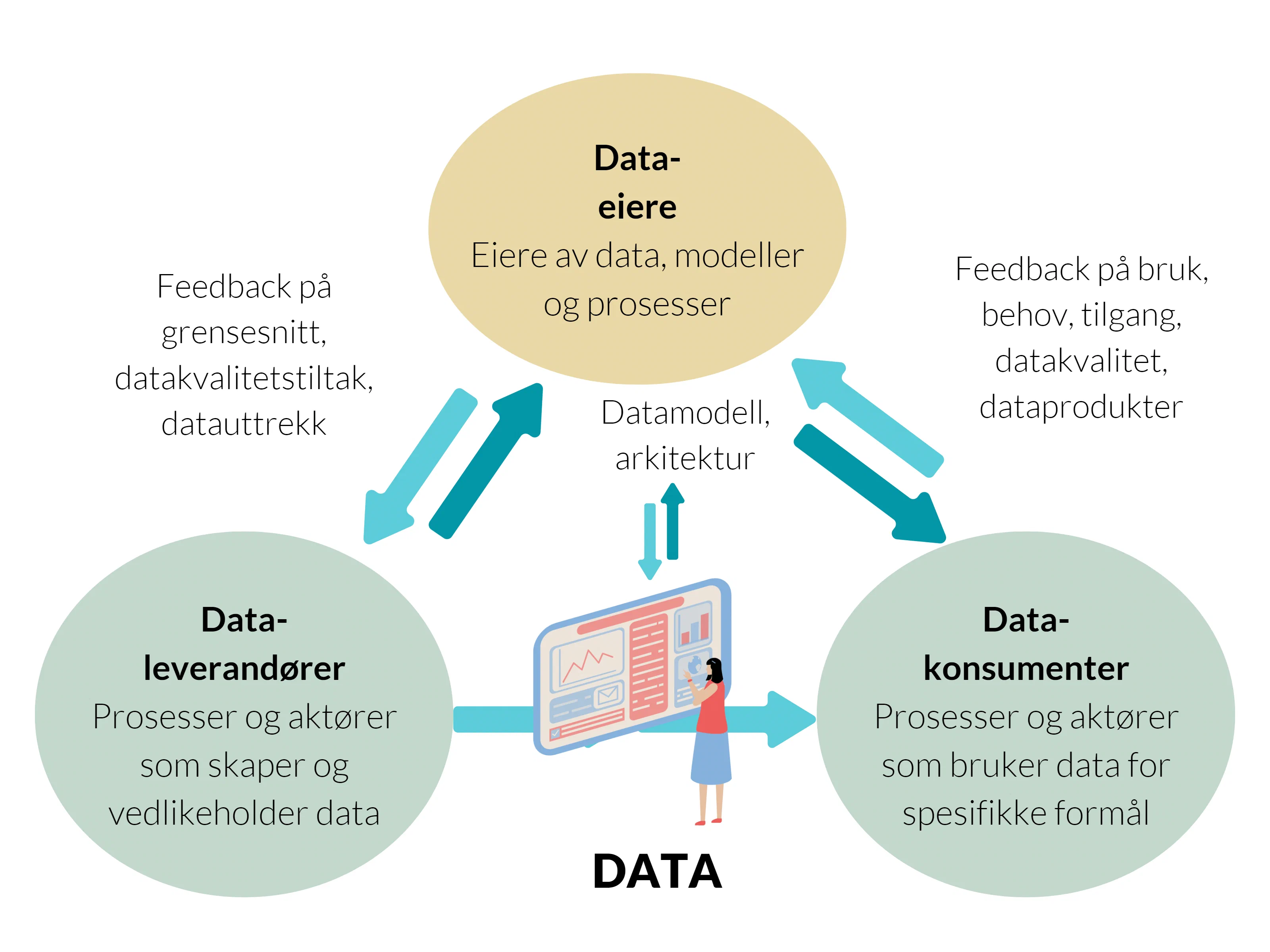
Data owners do not work alone – they interact with several others to ensure that data is useful and trustworthy:
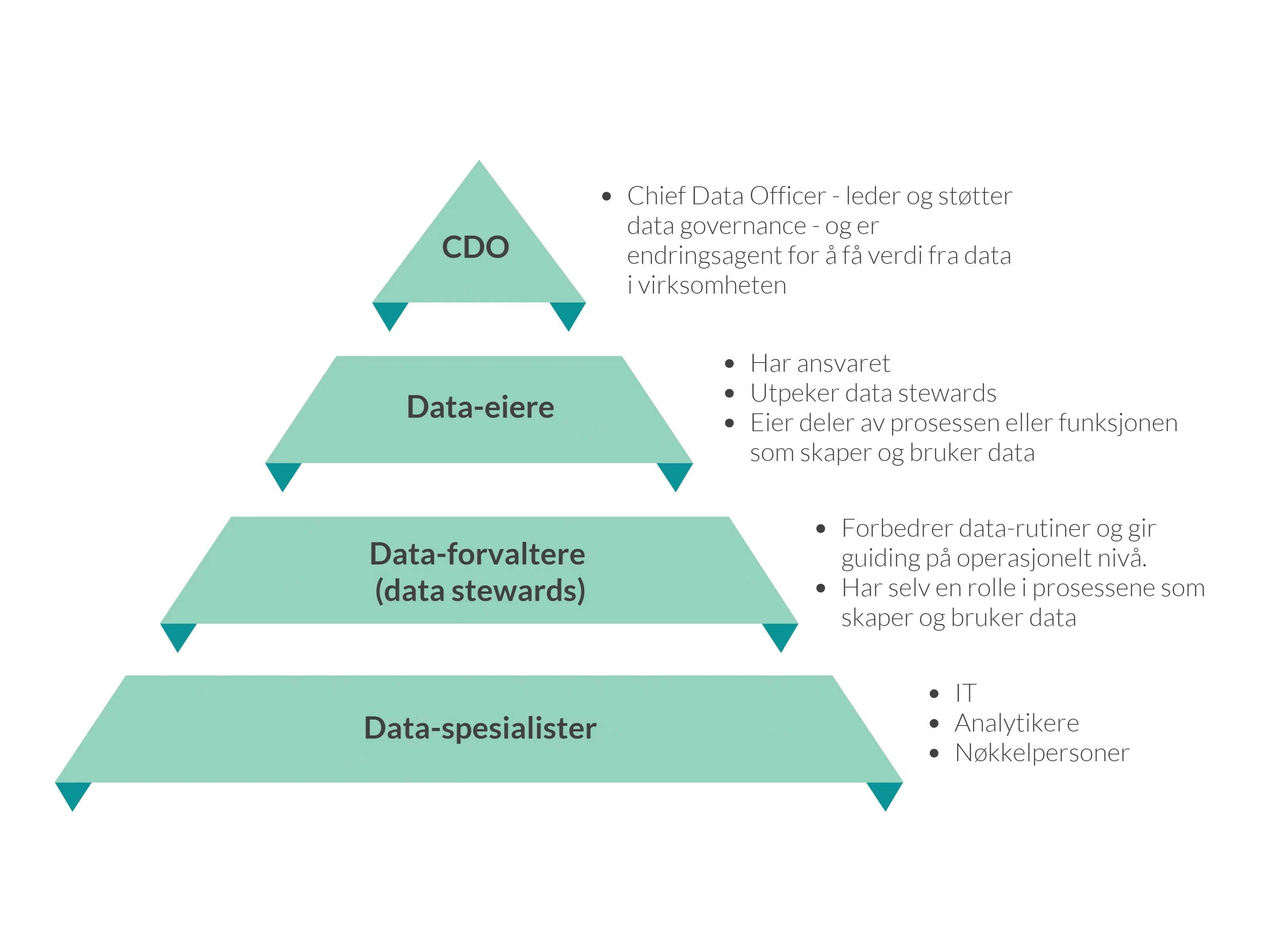
- There is often a Chief Data Officer (CDO), or a Chief Data & Analytics Officer (CDAO), who leads and supports the Data Governance efforts in the organisation and who drives and facilitates the organisation getting value from data. They provide direct support to the data owners.
- In large organisations, there will be many data owners per larger domain (think “sales and marketing”, “product” and “logistics”). In smaller organisations, the data owner may also own the domain. Data owners appoint data stewards to improve data management within their area.
- Data stewards assist data owners with operational data routines, guide users in creating correct data and maintain dialogue with system administrators about making adjustments in applications so that data is created and entered as efficiently as possible. They themselves play an active role in the processes that create and use data.
- Various data specialists, with expertise in IT, analytics or processes, assist as needed.
How do you get started with data ownership?
Although data ownership may seem like a simple concept, its implementation can present challenges. Taking on the role of a data owner entails responsibility, which may make many hesitant to assume the role.
Good data management begins with gaining control over data ownership. The execution of ownership is in practice the same as data management/data governance. Good data management needs to be driven by someone, typically the Chief Data Officer or an equivalent role.
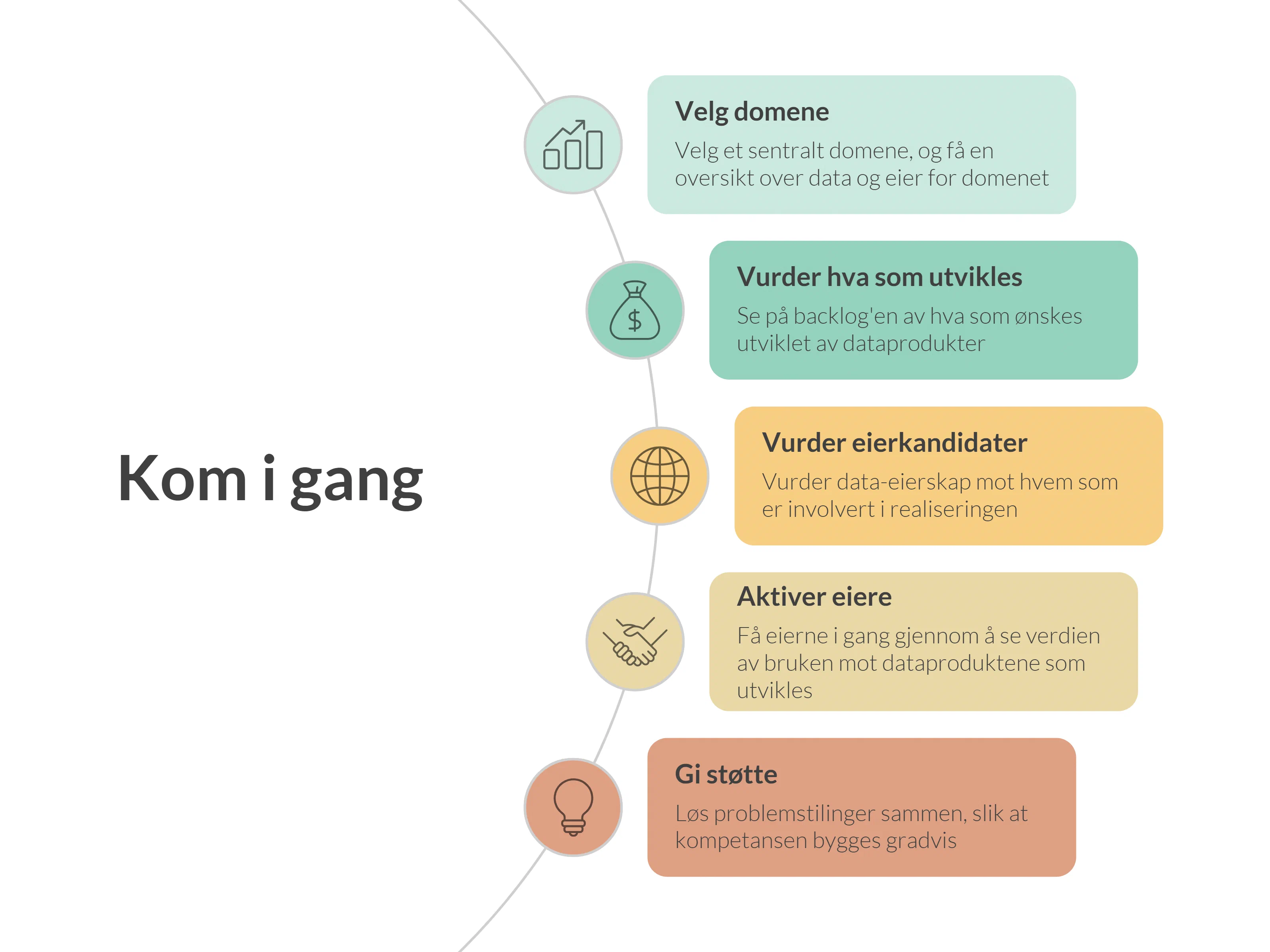
Here is what a Chief Data Officer must do to establish data ownership, if it is not already underway:
- Choose a domain Choose a central domain (sales, for example) and gain an overview of the data and the people who can own the domain as a whole.
- Assess what needs to be developed Have a dialogue with those who have an overview of the domain as a whole (the sales director, for example), and get an impression of both what already exists and the backlog of data products and outcomes that are desired.
- Evaluate ownership candidates Assess data ownership in light of data products that already exist and what is desired for further development. Is there data that will become particularly important? Should it be owned by one person (the sales director again), or divided among several? Once data owners are identified, you will gradually gain an overview of who is responsible, accountable, consulted and informed about data across the domain.
- Activate data owners Get data owners started through the joint development of new data products that use the data you want better control over. Then the owner(s) see the benefit of working on data trust and quality, as they will not achieve the outcomes they desire from the data products without also working on data management and data processes.
- Provide support Resolve issues that arise together with the data owners, so that they gradually build competence and can resolve more and more on their own over time.
There is no ‘one size fits all’ model for data ownership. You should expect to adjust the model along the way. If you achieve some early success stories, the work will gradually become easier and easier.
The good news is that data ownership works! The result is that over time we know how to use the data, who should have access, and we can achieve good data quality. We gain trust in the data and choose to use it to improve the top and bottom line.
What are you waiting for?