
Contents

Value | How data can provide value

Category: Data Strategy
Many of today's most successful organisations are building the ability to learn from data -- and are adopting increasingly advanced data analytics. How can data create value? Here are 5 examples of how data can create value.
Industry examples of value from data
For Spotify, Netflix, Uber – and Norwegian oda.no – we can say that data is the very core of the business. Without insights from data, none of them would be able to operate. Most organisations need data, but perhaps have not come quite as far in their data journey as these companies. Your organisation probably has not either. But do not worry – it is never too late to improve!
Each industry has its own examples where data is central to value creation. Here are some common areas where insights from data can provide value:
- Increasing the utilisation of employees’ time and skills by automating routine tasks – e.g. automatic registration of accounting entries
- Making production and internal operations more efficient and sustainable, for example by understanding quality challenges or being able to predict when equipment needs maintenance
- Improving the quality of products and services, e.g. by gaining a better understanding of who the customers or users are and what they need – and then further developing products and services to better meet customer needs
- Working more purposefully with marketing, customer relationships and sales, e.g. by being able to tailor marketing to different segments
- Understanding future supply and demand, so that the organisation can, for example, maintain the right stock levels based on expected demand or plan staffing more effectively
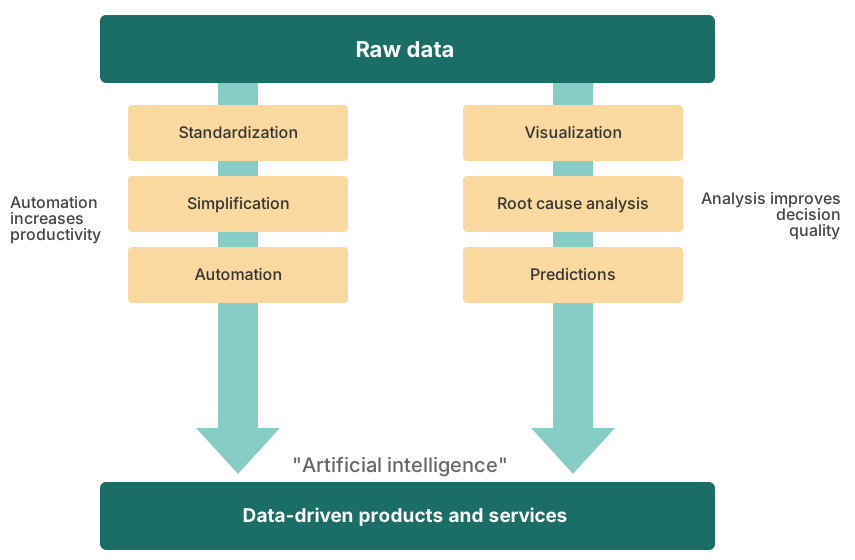
Two main tracks for creating value: insight and automation
Broadly speaking, we can say that data can provide value along two main tracks: providing better insight or understanding of a problem, or helping to automate an action or set of actions. In both tracks, we can work with data using simple methods (e.g. visualising a historical trend), or use sophisticated methods based on advanced analytics (e.g. machine learning to predict the probability of customer churn).
Case: Guttelus achieves increased profitability through the use of data
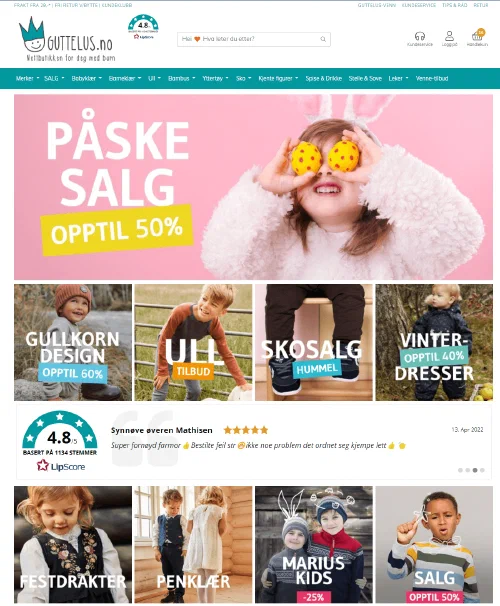
To make this a bit more tangible, it can be helpful to look at an example. Susanne Skou runs Guttelus.no, an online shop for children’s clothing. Three years ago, they ran this shop almost without looking at the data they had. They experienced modest growth each year, but without making much profit. The data, which primarily resided in the e-commerce platform and in Google Analytics, was not particularly complex, but it was not easily accessible for non-technical staff.
Evidence-based decisions
Susanne realised they needed to work more data-driven, and got help to set up a small data platform and also hired a dedicated business analyst. The investments were limited. Data, prepared in an SQL database in Azure with Power BI datasets and reports, gives Guttelus effective decision support.
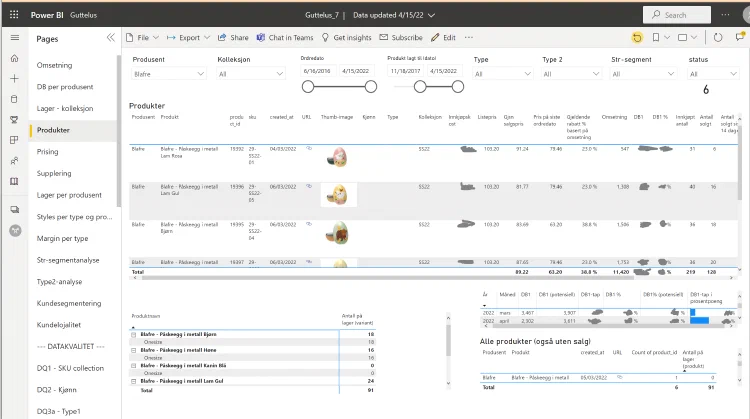
The most important thing is that they use the data they hold to learn and adjust – all the time. Data is used daily for campaign evaluation and marketing planning, targeting customer communications, purchasing and restocking goods, pricing and much more. The result is that they have achieved much higher revenue growth, better stock control, more accurate pricing, and significantly improved margins.
Automated warehouse operations
Indirectly, we can also say that Guttelus uses data for automation. They have outsourced warehouse operations to a third party, where goods are stored in an Autostore solution. Automated warehouse operations give Guttelus lower costs and faster, more reliable deliveries to end customers.
Put simply, the warehouse can be seen as a building kit, assembled rather like Lego bricks. The storage grid is the framework, and aluminium profiles form the tracks for the robots. The radio-controlled robots can move in all directions. The goods in the storage grid are kept in the dark and dust-free in sealed plastic bins, stacked sixteen high.
Software, driven by data and artificial intelligence, controls all movements and keeps track of where each individual bin is located at all times. The robots transport the bins to the ports, from where warehouse staff pick the goods, then label, pack and dispatch them to customers.
What does data mean for your organisation?
By analysing data and gaining insights, organisations can realise significant value. From automating tasks to optimising operations, improving product quality and refining marketing strategies: data-driven decision-making is critical for success.
Three years ago, Guttelus.no operated without leveraging the data they had available. However, they recognised the need to become more data-driven and invested in a data platform. By focusing on the two main tracks for creating value – namely insight and automation – Guttelus achieved effective decision support, which has resulted in increased revenue, better stock control, more accurate pricing and improved margins.
What does data mean for your organisation? You must assess for yourselves which challenges you should tackle – but please do get in touch with us for a conversation about the opportunities available to you!